

The wrong part can turn a routine replacement into another day of machine downtime. Before sourcing heavy construction equipment parts, identify the machine and component accurately. Fit can vary by model, serial number, and production configuration.
A part that looks right or matches a broad model name isn’t always a safe order. Confirm the machine details, compare OEM and aftermarket options, and check fit against the manufacturer’s specifications before committing. Compatibility checks are especially important for components connected to emissions-control systems or telematics.
This guide explains how to identify a component, assess its condition, evaluate a supplier, and check shipping requirements. You’ll learn which machine and part details to gather, what to ask when comparing options, and how to verify fit before ordering. Field & Fleet Parts Inc supplies OEM and aftermarket heavy equipment parts, including hydraulic pumps, engine parts, electrical parts, steel tracks, and transmissions. Its technical support can help clarify part details. Confirm shipping availability for your destination before ordering.
Key Takeaways
- Use the machine data plate, manual, and component markings to create an identification record before searching.
- Match heavy construction equipment parts to the machine’s exact model and configuration, then request fitment verification before ordering.
- Compare OEM, aftermarket, rebuilt, and used options by condition, documentation, fitment evidence, and return terms.
- Prepare the part number, quantity, destination, photos, and requested measurements to help reduce order delays and fitment errors.
- Ask about technical support, then confirm compatibility and shipping availability for your specific requirements.
Heavy Construction Equipment Parts: What They Include and Why Fit Matters
Heavy construction equipment parts are replacement components selected to match a machine’s make, model, configuration, and intended application.
Correct fit affects more than whether a component can be installed. It helps equipment operate as intended and supports maintenance planning, while reducing the risk of delays caused by an incorrect order. Heavy equipment includes machines with different designs and component systems. A part that suits one excavator or loader may not suit another, even if both share a brand.
Which parts commonly need replacement on construction equipment?
Replacement needs depend on machine type, operating conditions, and maintenance history. Common categories include engines and engine parts, electrical parts, hydraulic pumps, transmissions, and steel tracks. These components support the machine’s power, control, movement, or hydraulic functions. Their specifications and connections must match the equipment.
Attachments serve a different purpose: they connect to a machine to perform a specific task. An excavator bucket supports digging, while a loader attachment may be selected for material handling. The right attachment depends on both the machine and the work. Don’t assume an attachment or replacement component fits every machine in its category.
Why does exact equipment fitment matter?
Model year, configuration, and serial range can all affect compatibility. A manufacturer may revise a component or connection between production runs, or offer different configurations under the same model name. A brand name alone is not enough to identify a replacement. Even a part listed for a particular manufacturer could differ in mounting, dimensions, connections, or other application details.
Start with the machine’s data plate and consult its manual for identifying information and component specifications. Compare those details with markings on the existing part, when available. If the information doesn’t settle the question, ask the supplier to verify the match before ordering. Field & Fleet Parts Inc offers OEM and aftermarket equipment components, including hydraulic pumps, engines, electrical parts, steel tracks, and transmissions. Confirm current availability and model-specific compatibility with the supplier, using its technical support if you need help checking part details.
How to Identify the Right Heavy Construction Equipment Part
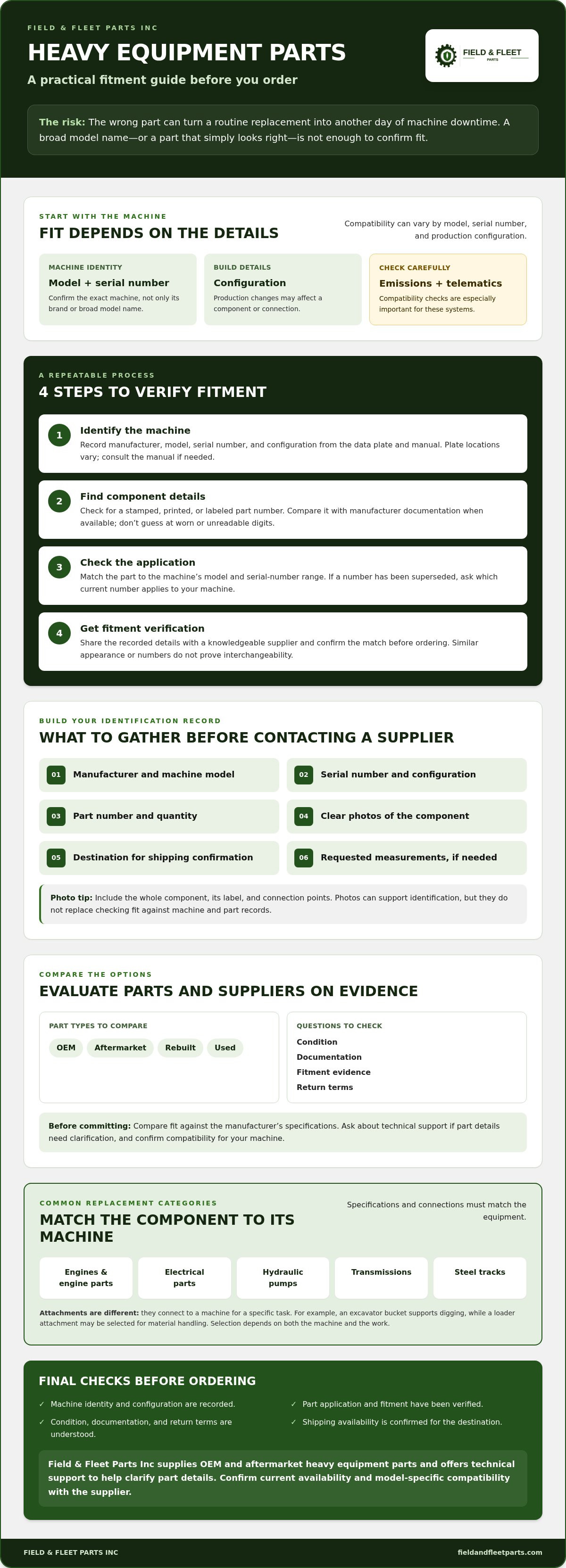
Use a repeatable check before searching for heavy construction equipment parts. A part number or machine brand can narrow the options, but neither confirms fitment on its own. Verify the machine’s full identity and the component application before placing an order.
What machine information should buyers collect?
Record the manufacturer, machine model, serial number, and relevant configuration. Check the data plate and manual for identification details. Plate locations vary by machine, so consult the manual if you can’t find one. Look for a part number or other markings on the existing component, too. Don’t guess at worn or unreadable digits. Record what you can and ask the supplier how to confirm the rest.
Before contacting a supplier, gather the manufacturer, model, serial number, configuration, part number, quantity, and clear photos of the component.
How can buyers verify a part number and fitment?
Follow this sequence:
- 1. Identify the machine. Record its manufacturer, model, serial number, and configuration from the data plate and manual.
- 2. Locate part details. Check the existing component for a stamped, printed, or labeled number. Compare it with relevant manufacturer documentation when available.
- 3. Confirm the application. Check that the part corresponds to the machine’s model and serial-number range. If a part number has been superseded, ask which current number applies to your machine.
- 4. Request verification. Share the recorded details with a knowledgeable supplier and get confirmation before ordering. Don’t assume two parts are interchangeable because they look alike or have similar numbers.
A sharp photo of the whole component, its label, and its connection points can help a supplier assess what you have. Include relevant measurements if requested. Photos support identification, but they don’t replace a fitment check against machine and part records.
For safe inspection or replacement work, follow the machine manufacturer’s procedures and applicable safety requirements. The OSHA equipment safety regulations include provisions concerning heavy equipment and parts during repair. Check which requirements apply to your worksite.
Field & Fleet Parts Inc offers technical support for buyers checking component details. Once you’ve gathered the machine information, you can review heavy equipment parts and ask the supplier to verify compatibility for your application.
How to Evaluate Heavy Construction Equipment Parts and Suppliers
Once you’ve confirmed the machine application, compare the available parts and the evidence behind each option. OEM, aftermarket, rebuilt, and used parts aren’t interchangeable quality categories. The right choice depends on fitment, condition, documentation, machine requirements, and the terms that apply to the purchase.
What should buyers compare across part options?
Start with application compatibility. Ask how the part was matched to your machine and whether its number or application details cover the relevant model and serial range. “OEM” describes a part’s relationship to the original manufacturer. It doesn’t, on its own, confirm that the specific part suits your machine or job.
For aftermarket parts, confirm the stated application and ask what supporting documentation is available. For rebuilt or used parts, ask about the item’s condition, what has been inspected or replaced, and what records are provided. Compare those details with your equipment’s service requirements. Don’t assume that a lower price, familiar brand, or similar appearance makes a part suitable.
Check the machine manufacturer’s guidance and review any applicable warranty terms before choosing. Warranty implications depend on the machine, the part, and the specific terms in effect. If you’re unsure whether a part choice affects coverage, confirm directly with the manufacturer or the party responsible for that warranty. A dedicated OEM-versus-aftermarket construction parts comparison can also help clarify the trade-offs once available.
How can buyers assess a parts supplier?
A dependable supplier should be able to explain the basis for its fitment information and what it needs to resolve an uncertain application. Ask how it checks part numbers, handles superseded numbers, and verifies machine-specific compatibility. Look for clear answers and transparent information about the part’s condition and included documentation.
Before ordering, review the return conditions and confirm what applies if the supplied part doesn’t match the verified application. Check current availability and shipping options for your destination. If timing matters, ask for the relevant shipping details rather than assuming a delivery date. Technical assistance can help when catalog information or component markings leave questions open.
Field & Fleet Parts Inc supplies OEM and aftermarket heavy construction equipment parts, including engines, electrical parts, hydraulic pumps, steel tracks, and transmissions. Its technical support can help buyers discuss component details. Before proceeding, confirm fitment, condition, availability, shipping scope, and applicable order terms.
Heavy Construction Equipment Parts Ordering: A Practical Checklist
A complete order request gives the supplier a clearer basis for checking fitment, availability, and shipping. Before purchasing heavy construction equipment parts, organize the machine and component details, then confirm the terms that apply to your destination. Keep confirmed information separate from estimates or assumptions about dispatch and delivery.
What information should go into a parts request?
Use this checklist to prepare your request:
- Machine identity: Manufacturer, model, serial number, and relevant configuration.
- Part details: Part number, component description, and quantity required.
- Preference: New, aftermarket, used, or another condition option, if available and suitable.
- Visual references: Clear photos of the full component and its markings. Provide measurements if the supplier requests them.
- Order details: Complete destination and preferred contact information for follow-up.
Ask the supplier to confirm that the part matches the machine and serial-number range, and to verify current availability before you finalize the order. If a number is missing or unclear, say so rather than filling the gap with a guess. Photos and measurements can support the review, but the supplier should confirm the application.
What should buyers confirm before shipment?
Review the order details before authorizing the purchase. Check that the part description, stated condition, quantity, and machine fitment match your request. Clarify return conditions and ask which shipping options are available for your destination. A listed shipping option or order status doesn’t guarantee a dispatch or arrival date, so confirm timing directly if it affects your work plan.
For an international order, provide the full destination and ask the supplier to confirm shipping availability and any destination-specific paperwork or delivery requirements it can identify. Requirements vary by destination. Verify applicable import and delivery requirements with the relevant authorities or a qualified adviser before purchase rather than relying on assumptions.
Field & Fleet Parts serves customers globally and offers online ordering and technical support. Confirm shipping availability for your destination, and verify current stock and fitment before placing an order. Submit your equipment parts request with the machine and component details ready for review.
Source Heavy Construction Equipment Parts with Field & Fleet Parts
Field & Fleet Parts supplies OEM and aftermarket components for construction, agricultural, and industrial equipment. Its offerings include engines and engine parts, electrical parts, hydraulic pumps, steel tracks, and transmissions. These parts serve different machine systems, so verify the specific application instead of assuming a listed part fits every make or model.
The company identifies Caterpillar, John Deere, and Kubota among the equipment brands relevant to its parts business. Brand coverage can vary by component and machine configuration. Confirm current inventory and model-specific compatibility directly before ordering heavy construction equipment parts.
Which heavy equipment parts can buyers source?
Start with the system or component you need. An engine or transmission supports machine operation; electrical parts serve electrical systems, while hydraulic pumps and steel tracks address other equipment requirements. Field & Fleet Parts also lists attachments and other equipment components. Availability depends on the exact part, brand, model, and application, so treat category listings as a starting point, not confirmation of stock or fit.
Online ordering provides a way to submit a parts request, and technical support can help clarify component details when the part number or application is uncertain. Share the machine identification and component information, then ask the company to verify fitment and availability for your equipment.
What are the next steps for finding a part?
Use the details from your ordering checklist: machine manufacturer, model, serial number, configuration, component description, part number if known, quantity, and destination. Clear photos or measurements may also help if requested. If a number is incomplete or you’re unsure which application applies, explain what you know and ask for assistance instead of guessing.
Field & Fleet Parts serves customers worldwide from operations in Texas and British Columbia. Confirm shipping availability and destination requirements with the company. Don’t treat a general shipping statement as a delivery-date guarantee. Check current stock and order terms before completing a purchase.
To check an application, shop heavy equipment parts and provide your machine and component details so the part can be reviewed against your requirements.
Make Your Next Parts Order with Confidence
Finding the right heavy construction equipment parts starts with accurate machine and component details. Confirm the part number and fitment against the machine’s model and serial range, then compare condition, documentation, and order terms. These checks can help prevent incorrect orders and unnecessary downtime.
Field & Fleet Parts supplies OEM and aftermarket parts and offers technical support to help customers with parts sourcing. With locations in Texas and British Columbia, the company serves customers globally. Check current availability, compatibility, and shipping options for your machine and destination before ordering.
Have your machine details ready and shop heavy equipment parts. Share the information needed to confirm the right application before placing your order.
Frequently Asked Questions
How do I find the correct part for my heavy equipment?
Start with the machine’s manufacturer, model, serial number, and configuration. Check the data plate and equipment manual, then compare those details with the number or markings on the existing component. Ask a supplier to verify that the part matches the machine’s application and serial range before ordering. A photo can help clarify what you need, but it doesn’t replace a fitment check.
Can aftermarket parts fit heavy construction equipment as well as OEM parts?
Aftermarket parts can be suitable when confirmed for the exact machine and application. OEM status alone doesn’t establish whether a particular part fits your configuration or meets the job’s requirements. Compare fitment evidence, documentation, condition, and applicable return terms. Check the machine manufacturer’s guidance and any relevant warranty terms, since warranty implications depend on the machine, part, and conditions in effect.
What information do I need to order heavy equipment parts?
Gather the machine manufacturer, model, serial number, configuration, part number if known, component description, and quantity. Include the condition you’re looking for, your destination, and contact details. Clear photos of the component and its markings can help if the supplier requests them. Ask the supplier to confirm fitment and current availability before finalizing the order, especially if any details are uncertain.
How can I check whether a part fits my machine’s serial number?
Compare the part number and machine serial number with the equipment manual, manufacturer documentation, or supplier records. Ask the supplier to confirm that the part application covers your machine’s serial-number range. If the original number has been superseded, verify which replacement number applies to your model and serial number. Don’t assume a part fits based only on the machine brand or a similar-looking component.
Are rebuilt or used heavy equipment parts worth considering?
They may be options, depending on the application, component condition, documentation, and expected service requirements. Ask about the part’s condition, available inspection details or records, and applicable return terms. Compare those details with your equipment needs and the manufacturer’s guidance. Don’t assume a used or rebuilt part is suitable based on appearance alone, and confirm fitment before purchase.
Can heavy construction equipment parts be shipped internationally?
International shipping may be available, but confirm options for your destination before ordering. Field & Fleet Parts serves customers globally from locations in Texas and British Columbia. Ask the supplier to verify shipping availability, destination-specific paperwork, and delivery requirements. For import or other local requirements, check with the relevant authorities or a qualified adviser. Confirm order and shipping details directly rather than assuming a delivery date.
What should I do if I cannot find a part number?
Use the machine data plate and manual to identify the manufacturer, model, serial number, and configuration. Check the component for labels, stamps, or other markings, and take clear photos of the part and its connections. Share those details with a knowledgeable supplier and ask for help verifying the application. Don’t guess at worn or unreadable characters, and don’t order a substitute until fitment is confirmed.


