
What if a part that looks like an obvious match doesn’t fit your machine? With heavy machinery parts, choosing the right category is only the first step. The correct replacement also depends on the equipment’s make, model, serial number, configuration, and the component’s details.
It’s understandable to feel uncertain when a machine problem could involve its engine, electrical system, hydraulics, transmission, or another assembly. OEM and aftermarket labels can add another layer of confusion when compatibility matters.
This guide explains the main heavy machinery parts categories and what to gather before ordering. You’ll learn how to identify a component, check fitment, and compare OEM and aftermarket options. Field & Fleet Parts Inc supplies both types of parts, including engines and engine parts, electrical parts, hydraulic pumps, transmissions, steel tracks, attachments, and tractor parts. Its technical support can help you review details before you make a selection.
Key Takeaways
- Heavy machinery parts range from system components to attachments. Identify what needs replacement before browsing by category.
- Gather the machine’s make, model, serial number, and any existing part number to narrow down compatible options.
- Compare OEM and aftermarket parts by stated compatibility, documentation, supplier information, and equipment requirements.
- Use equipment documentation and observed condition to guide replacement decisions. A routine inspection is not a diagnosis.
- Verify fitment before ordering. Share machine and component details with your supplier if you need help confirming a match.
What Counts as a Heavy Machinery Part? A Guide to the Main Categories
Heavy machinery parts are components used to maintain or restore the systems and functions of agricultural, construction, and industrial equipment. They include engine and electrical components, hydraulic pumps, transmissions, and track-related parts. Knowing which system a component belongs to is a useful starting point, but the machine’s application and configuration also matter.
Not every item associated with machinery is an individual replacement part. An attachment is fitted to a machine to perform a task, while a complete tractor or excavator is a machinery unit, not a part. These distinctions help you describe what you need when searching or contacting a supplier. For a broader overview of the machines themselves, see Heavy equipment.
Which equipment systems rely on replacement parts?
Parts are often grouped by the systems they support. Engines and engine parts help power a machine. Electrical parts support its electrical functions, hydraulic pumps contribute to hydraulic operation, and transmissions transfer power through the drivetrain. Steel tracks belong to the track-related category for applicable machines. Because these systems can interact, a symptom in one area doesn’t automatically identify the failed component.
For example, an equipment issue may involve an electrical component connected to a broader operating system, rather than a standalone mechanical part. Use the machine’s documentation and a qualified assessment to narrow down the component. Browsing by category can help you search, but it does not confirm which replacement fits.
How do parts differ across agricultural, construction, and industrial equipment?
Application shapes the type of part required. A tractor may need a tractor-specific component. An excavator may use different system components or a compatible attachment. Industrial equipment can have requirements tied to its particular machine and setup. Even machines within the same broad category can differ by configuration.
A familiar brand name alone doesn’t establish fitment. A part listed for a manufacturer may not suit every model or configuration from that brand. Before selecting from heavy machinery parts categories, identify the machine and the system involved, then confirm the component against the relevant equipment details. The category helps you search; machine-specific information helps you verify the match.
How to Identify the Right Heavy Machinery Part Before Ordering
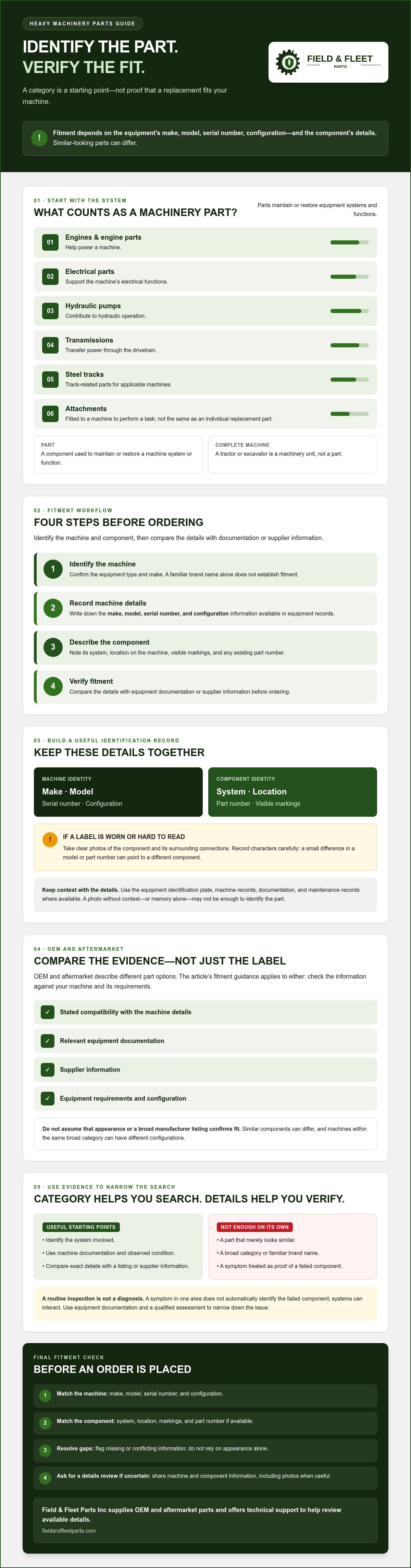
Start fitment checks by identifying the machine. The right replacement depends on its specific make, model, serial number, and configuration. Similar-looking components can differ, so don’t order based on appearance or a broad category alone. Use this sequence to narrow down the match:
- 1. Identify the machine. Confirm the equipment type and make.
- 2. Record its details. Write down the model and serial number, along with any configuration information in the equipment records.
- 3. Identify the component. Note its system, location on the machine, visible markings, and any existing part number.
- 4. Verify fitment. Compare those details with equipment documentation or supplier information before ordering.
What machine information should you collect?
Start with the equipment’s identification plate and machine records. Depending on the machine, its documentation or maintenance records may provide useful details. Check the component for a part number or other markings, and note where it sits in the assembly. If a label is worn or difficult to read, take clear photos of the component and its surrounding connections to support identification.
Record characters carefully. A small difference in a model or part number can point to a different component. Keep the details together instead of relying on memory or a photo without context.
How can you verify fitment when details are incomplete?
Compare your notes with the relevant equipment documentation and the supplier’s listing. Check that the listed application matches the machine details you have, and flag missing or conflicting information before purchase. Appearance can help describe a part, but it can’t confirm internal differences or configuration-specific fitment.
If you’re unsure, share the machine make, model, serial number, component location, visible markings, and photos with technical support. Field & Fleet Parts Inc provides technical support to help review available details. For equipment used on construction sites, consult the relevant OSHA equipment safety regulations for safety requirements. They are not a substitute for confirming part compatibility. Once you’ve gathered the identifiers, use them to discuss heavy machinery parts with a supplier and check fitment before ordering.
OEM and Aftermarket Heavy Machinery Parts: What the Terms Mean
OEM and aftermarket describe the source of a replacement part, not a guaranteed result. An OEM part is supplied by the original equipment manufacturer or its designated parts channel. An aftermarket part is produced by a third-party manufacturer for use as a replacement. Either option still needs to match the machine and component application.
These terms are useful starting points, but they don’t tell you everything about documentation, compatibility, or suitability for a particular machine. The broader parts industry includes manufacturers and aftermarket suppliers, as reflected in the Motor & Equipment Manufacturers Association (MEMA). For a purchasing decision, focus on the specific part and the evidence available for its intended application.
What does OEM mean for a replacement part?
OEM identifies a connection to the original equipment manufacturer. It doesn’t establish that a part fits every machine from that brand or guarantee a particular level of quality or performance. Confirm the equipment model, serial number, and component application, then check the part’s identifying details against relevant documentation. Warranty terms can vary, so review the terms that apply to the specific machine and part instead of making assumptions based on the OEM label.
What should buyers compare in an aftermarket part?
Aftermarket parts are made by companies other than the original equipment manufacturer. Their details and stated applications can vary by supplier and component. Before choosing one, review the listed machine compatibility, part identifiers, available documentation, and supplier information. Consider how the equipment is used and what the replacement needs to do. If the application or documentation is unclear, ask the supplier’s technical support to review the information before ordering.
- Compatibility: Does the stated application match the machine and component details?
- Documentation: Are identifiers and relevant product details provided clearly?
- Supplier information: Can the supplier explain the listed application or clarify missing details?
- Operating requirements: Does the option suit the machine’s use and replacement needs?
Field & Fleet Parts Inc supplies OEM and aftermarket heavy machinery parts and offers technical support to help customers review component details. Use that support as part of the verification process, not as a substitute for the machine’s documentation. For either sourcing category, confirm fitment before ordering. A comparison for a specific part type should account for that component’s application and requirements.
When Should You Replace a Heavy Machinery Part?
Base a replacement decision on the part’s observed condition, the equipment manufacturer’s inspection and maintenance guidance, and a qualified assessment when needed. A visible issue or change in operation may signal that something needs attention, but it doesn’t automatically identify the failed component.
Routine inspection means observing equipment and recording changes. Diagnosis goes further by determining the cause of a symptom and whether a component needs replacement or another response. That assessment may require a qualified technician to inspect the machine directly. Separating these steps helps prevent ordering a part before the fault and fitment are clear.
Which signs should prompt a closer parts inspection?
Investigate changes in operation, visible damage, unusual noise, or warning indicators. Note when the sign appears and whether it changes with the machine’s task or operating conditions. These clues can guide further assessment, but symptoms may have multiple causes. Follow the manufacturer’s inspection and maintenance guidance, and don’t treat a warning or sound alone as proof that a particular part is defective.
How can operators prepare for a replacement decision?
Before seeking support, gather the information that can help distinguish a parts question from a diagnosis:
- Symptom: Describe what changed and when it occurs.
- Operating context: Note the task being performed and any relevant conditions.
- Machine details: Record the make, model, and serial number.
- Component information: Include its location, visible markings, and any existing part number.
- Maintenance history: Gather relevant inspections, previous work, or replaced components.
When diagnosis requires hands-on inspection, have a qualified technician assess the equipment. Once the component is identified, verify that the replacement matches the machine before arranging an order. Incorrect or delayed identification can complicate parts sourcing and uptime planning, especially if a component proves incompatible or the issue has another cause.
Field & Fleet Parts Inc offers technical support to help review available machine and component details. For sourcing options after identifying the need, see heavy equipment parts.
How to Source Heavy Machinery Parts With Confidence
A reliable sourcing process moves from machine identification to a verified order. Use this sequence to organize your search and resolve fitment questions before buying:
- Identify: Record the equipment make, model, and serial number. Note the component name, location, markings, and any existing part number.
- Verify: Compare those details with the equipment documentation and the part’s stated application.
- Compare: Review available OEM and aftermarket options, including compatibility information, documentation, and supplier details.
- Confirm: Resolve unclear fitment or component details with the supplier before placing an order.
- Order: Once the match is clear, confirm the order information and shipping arrangements for your destination.
What should you confirm with a parts supplier?
Share the machine’s make, model, and serial number, along with the component name and any available part number. Include the component’s location and clear photos or visible markings when useful. These details help the supplier review your request and identify anything that still needs checking.
Before ordering, ask the supplier to clarify stated compatibility and any unresolved differences between the component and your machine configuration. If the order will ship elsewhere, confirm available shipping options and destination-specific logistics. Don’t assume a delivery timeframe until the supplier confirms it.
How can Field & Fleet Parts support a parts search?
Field & Fleet Parts offers online ordering and supplies OEM and aftermarket parts for agricultural, construction, and industrial equipment. Its categories include engines and engine parts, electrical parts, hydraulic pumps, transmissions, steel tracks, attachments, and tractor parts. Technical support is also available to help review the machine and component details you’ve gathered.
Share your equipment identifiers and part information, then confirm compatibility and shipping details before completing an order. Checking these details first can help you make a more informed sourcing decision and reduce fitment uncertainty. To discuss a component or explore sourcing options, visit Field & Fleet Parts.
Make Your Next Parts Order With Confidence
Choosing heavy machinery parts starts with identifying the component category, but fitment depends on the machine and its configuration. Record the make, model, serial number, and component details, then verify compatibility before ordering. Compare OEM and aftermarket options by their stated application, documentation, supplier information, and your equipment’s requirements. If the machine shows a change in operation or visible damage, follow its maintenance guidance and seek a qualified assessment rather than assuming which part has failed.
Field & Fleet Parts supplies OEM and aftermarket parts for equipment brands including John Deere, Kubota, and Caterpillar. Online ordering, worldwide shipping, and expert technical support can help you move from a parts question to a more informed sourcing decision. Have your machine and component details ready as you review the available options.
Frequently Asked Questions
What are heavy machinery parts?
Heavy machinery parts are components used to maintain or restore the systems and functions of agricultural, construction, and industrial equipment. Examples include engine and electrical parts, hydraulic pumps, transmissions, and steel tracks. Attachments are fitted to machines to perform tasks, while complete tractors or other equipment units are not individual replacement parts. Identifying the relevant system helps narrow a search, but machine details are still needed to confirm fitment.
How do I find the right part for my heavy equipment?
Start with the machine’s make, model, and serial number, then identify the component by its name, location, markings, and any existing part number. Check the equipment documentation and compare those details with the supplier’s stated compatibility. Similar-looking components may suit different machine configurations. If information is incomplete or conflicting, share your records and clear photos with the supplier’s technical support before ordering.
Are OEM parts better than aftermarket parts for heavy machinery?
Not automatically. OEM parts come from the original equipment manufacturer or its designated parts channel, while aftermarket parts are made by third-party manufacturers. The right choice depends on confirmed compatibility, available documentation, supplier information, and the equipment’s operating requirements. An OEM label alone doesn’t confirm fitment or guarantee a particular result. Review the details for the specific part and machine, and check warranty terms separately if they affect your decision.
Can one heavy machinery part fit multiple equipment models?
Yes, a part may be listed as compatible with more than one model, but don’t assume that shared appearance or brand means it will fit. Compatibility can depend on configuration and production details. Check the supplier’s stated application against the machine’s model and serial number, and consult the relevant equipment documentation. If the fitment information doesn’t clearly cover your machine, ask the supplier to review the details before ordering.
How do I find a part number for heavy equipment?
Check the existing component for a label, stamp, or other visible identifier, and review the equipment’s parts or maintenance documentation. The machine identification plate and records can help establish the make, model, and serial number needed to search for the component. If the number is missing or unreadable, note the part’s location and photograph it with nearby connections. Share those details with a supplier’s technical support for help identifying the part.
How much do heavy machinery parts cost?
The cost depends on the component, machine application, and whether you’re considering an OEM or aftermarket option. Pricing can also vary by supplier and the specific part, so a general figure may not reflect the item you need. First confirm the component and fitment, then request a quote using the machine’s make, model, serial number, and any existing part number. Compare options based on compatibility and your requirements, not price alone.
Can I order heavy machinery parts online and have them shipped internationally?
Yes. Field & Fleet Parts offers online ordering and worldwide shipping for its parts customers. Before ordering, confirm that the component matches your machine, then check available shipping options and destination-specific logistics with the supplier. Provide complete equipment and part details if you need help reviewing fitment. Field & Fleet Parts also offers technical support and operates locations in Texas and British Columbia, Canada.
Explore heavy machinery parts and contact Field & Fleet Parts for technical support.
