

A part that looks right can still be the wrong fit. Heavy equipment parts may vary by model year, configuration, or part number, so ordering by appearance alone can lead to delays and downtime. Start with your machine’s identity, not a guess based on the old component.
The challenge is confirming compatibility when catalog details are unclear, then deciding whether an OEM or aftermarket option suits the repair. This guide explains which machine details to gather, how to check part information, and what to compare before ordering.
You’ll also learn how to assess a supplier’s inventory and support. Field & Fleet Parts Inc sells OEM and aftermarket parts for agricultural, construction, and industrial equipment, with technical support to help customers source components. From engines and electrical parts to hydraulic pumps, steel tracks, and transmissions, accurate details can make your search more direct.
Key Takeaways
- Start with the machine’s make, model, and serial number to narrow down compatible heavy equipment parts.
- Check part numbers and component markings where available, then verify fitment before ordering.
- Compare OEM and aftermarket options using documentation, fitment evidence, and support for your specific application.
- Confirm quantity, condition, listing details, and shipping destination before completing an order.
- Field & Fleet Parts offers OEM and aftermarket parts across equipment categories, with technical support to help source components.
Heavy Equipment Parts and the Systems They Support
Heavy equipment parts are replacement or service components installed in machinery to keep its systems operating. A part serves a particular function, such as generating power, moving fluid, transferring torque, or supporting ground contact. Identify the system involved in the repair, then narrow your search to its component category. The Heavy equipment overview describes major machine systems, including the implement, traction, structure, power train, and control or information systems. This framework helps organize a parts search around the machine’s function, not just a component’s appearance.
A part is a component fitted to a machine system; an attachment connects to a machine to perform a task. A hydraulic pump is a part, while an implement used for digging or lifting is an attachment. The distinction matters because the attachment and the components that power or connect it are separate sourcing categories.
Which heavy equipment parts categories are commonly replaced?
Replacement needs can involve several systems. Symptoms may point you toward a category, but they don’t confirm which component has failed. Use them to guide your investigation, then verify the specific part against the machine details.
- Engines: Engine parts support power generation and may include components within the engine assembly.
- Electrical systems: Electrical parts serve functions such as starting, charging, and machine controls.
- Hydraulics: Hydraulic pumps and related components support fluid-powered machine functions.
- Transmissions: Transmission components transfer engine power to support machine movement.
- Undercarriage: Steel tracks are one example of parts associated with a tracked machine’s ground-contact system.
These categories are a starting point, not a universal parts list. Tractor parts can span multiple systems, while an excavator repair may involve hydraulic, engine, electrical, or undercarriage components. The machine type and repair symptoms help determine where to investigate first.
How do parts differ across construction, agriculture, and industrial equipment?
Application affects operating conditions and the specifications a replacement must meet. A tractor may work in fields and on roadways, an excavator may operate on changing construction sites, and industrial machinery may run in a fixed production setting. These examples don’t establish universal wear patterns. They show why buyers should consider a machine’s use, operating environment, and component requirements when checking compatibility.
Don’t choose by category alone. Confirm the specific machine and application before comparing components. Field & Fleet Parts Inc sells parts for agricultural, construction, and industrial equipment, including tractor parts, electrical parts, engine parts, hydraulic pumps, steel tracks, and transmissions. Its range of categories can help buyers investigate different system needs through one supplier, while technical support can help clarify sourcing questions using machine details.
How to Identify the Correct Heavy Equipment Part Before Ordering
Identify the machine before ordering a part. The same-looking component can fit differently across models or production configurations. A make and model help narrow the search, but may not confirm a match. Serial numbers and component identifiers can reveal differences that aren’t obvious from appearance alone.
Use this sequence to move from a general repair need to a part you can check for compatibility:
- Record machine identity. Note the manufacturer, model, and full serial number. Add the engine model or other component identifiers if relevant.
- Locate part details. Check the existing component for a readable part number, label, casting mark, or other identifier. When practical, photograph the component and its markings before removal.
- Confirm fitment. Compare the part number with reliable machine documentation or the listing details. Ask the seller to confirm any configuration-specific questions before ordering.
Which machine details help narrow down a parts search?
Copy details exactly as shown on the equipment, including letters, numbers, and suffixes. Record the manufacturer, model, and serial number, then add engine or component identifiers when available. If you can do so safely, take clear photos of the installed part and its labels. Equipment documentation can help resolve missing details. If identification remains unclear, ask technical support to review the information you have.
How can you verify heavy equipment parts fitment?
Start with the listed part number and compare it with the existing component or reliable equipment documentation. Check the listing for model or configuration notes, and ask the seller to confirm any detail that could affect fitment. A brand name or visual similarity doesn’t prove compatibility. A component may look nearly identical but differ in its connections, dimensions, or production application.
This verification step is part of identifying worn or defective components. The U.S. Bureau of Labor Statistics describes how Heavy vehicle and mobile equipment service technicians inspect equipment and replace parts. Accurate machine and component information helps make the move from identifying a need to sourcing a replacement more dependable.
If a listing doesn’t answer a fitment question, pause before ordering. Share the machine identity and component markings with the seller’s technical support team. Field & Fleet Parts Inc offers technical support to help customers source parts. You can also review heavy equipment parts as you narrow down your options.
OEM vs. Aftermarket Heavy Equipment Parts: How to Compare Your Options
OEM and aftermarket describe different sourcing routes, but the label alone doesn’t establish whether a component suits a repair. Compare the available evidence for the specific part, machine, and application. The Association of Equipment Manufacturers is an industry resource for equipment manufacturers and suppliers. Buyers should still verify the details and fitment of each part listing.
Choose based on verified fitment and repair requirements, not the label alone. Use the same criteria for each option so you can make a practical comparison rather than rely on assumptions about origin.
| Criterion | What to compare |
|---|---|
| Source | Is the part identified as OEM or aftermarket, and is its source clearly stated? |
| Documentation | Are part references, specifications, condition, and applicable limitations explained? |
| Fitment evidence | Does the listing or supporting information match the machine and configuration? |
| Support | Can the seller answer questions about compatibility and the information used to confirm it? |
When might an OEM part be the right choice?
Some buyers prioritize a manufacturer-specified component because they want a traceable reference that aligns with equipment documentation. Check the machine’s parts information and confirm that the listing corresponds to the required part and configuration. If warranty terms or other equipment conditions affect your decision, review the applicable documents or ask the responsible equipment provider. Don’t assume every OEM part automatically suits every repair.
What should buyers verify when considering aftermarket parts?
Review the stated compatibility, specifications, condition, and supporting information. Ask the seller how the match was checked against the machine configuration, especially if the listing covers multiple models or versions. Consider the documentation and support available for the specific part. Assess an aftermarket option based on its evidence for your application, not on its category alone.
The right choice depends on the component, machine, application, and buyer’s requirements. For a straightforward replacement, clear fitment evidence may be the priority. For a component with specific documentation or equipment-term considerations, verify more before deciding. Field & Fleet Parts Inc sells both OEM and aftermarket parts, with technical support to help customers source components. Compare the details for the part you need, then resolve any fitment questions before ordering.
A Practical Heavy Equipment Parts Ordering Checklist for Fewer Fitment Errors
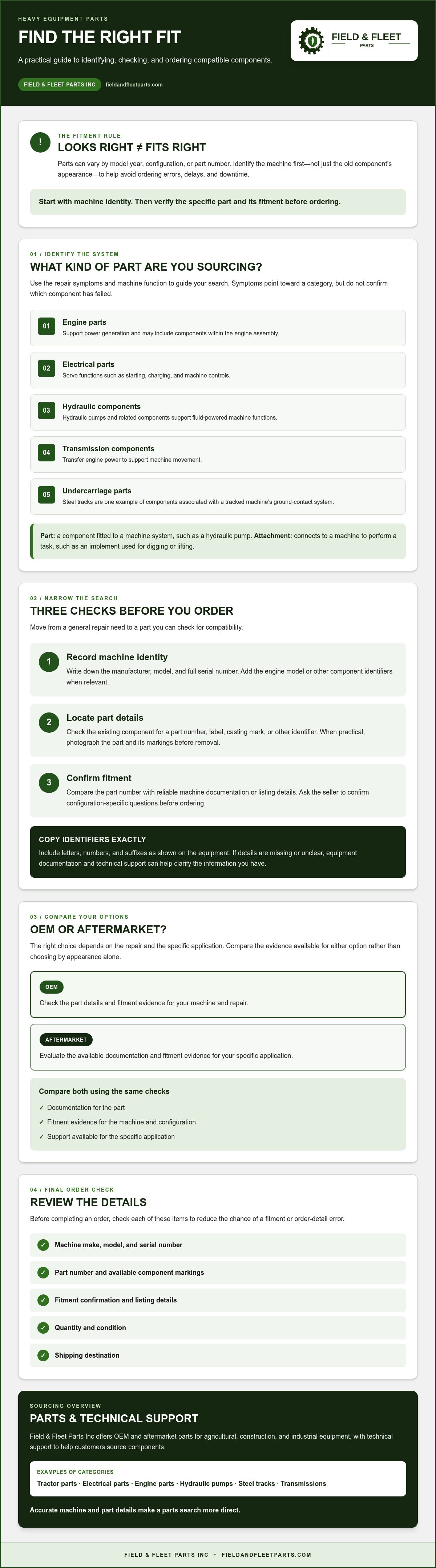
Before adding heavy equipment parts to an order, check more than the item name. Reviewing fitment, listing details, and shipping information can help catch mismatches before they affect the repair schedule. Use this checklist and resolve discrepancies with the supplier before ordering.
- Fitment: Match the part reference to reliable machine documentation or the existing component. Confirm the make, model, serial number, and configuration notes relevant to the listing.
- Quantity: Check how many components the repair requires and make sure the order quantity matches.
- Condition: Verify whether the part is new or used and whether its stated condition meets your requirements.
- Listing details: Review the part reference, compatibility information, specifications, and limitations. Ask about anything missing or unclear.
- Shipping destination: Confirm the full destination address and ask the supplier to verify current shipping options for it.
What information should you confirm with a parts supplier?
Share the machine identifiers and component markings you have, then confirm the part reference, stated condition, and configuration notes against them. Ask whether technical support can review the available information. Verify stock and shipping options directly before committing to an order. If the part number, fitment notes, condition, or quantity don’t align, pause and ask for clarification.
How can you reduce delays when ordering parts internationally?
Include complete equipment identifiers and clear component photos with your inquiry. Confirm the destination and shipping method with the supplier, and ask what order documentation is required for that shipment. Delivery estimates can vary, so have the supplier verify current timing before setting expectations with your team. Field & Fleet Parts Inc offers online ordering and worldwide shipping. Confirm that the destination and current options suit your order.
When ordering online, use the checklist to validate the part and order details. Complete information helps the supplier review your request and gives you a clearer basis for confirming the component before purchase.
Ready to check your order details against available parts information? Review heavy equipment parts and confirm fitment or shipping questions with the supplier before ordering.
Source Heavy Equipment Parts with Field & Fleet Parts
A dependable sourcing process follows a clear path: identify the machine, verify the component’s fitment, compare OEM and aftermarket options, then confirm the order details. Field & Fleet Parts Inc supplies OEM and aftermarket heavy equipment parts for agricultural, construction, and industrial equipment. Bringing accurate machine information to your search helps focus the next step, whether you’re identifying an engine component or checking a part for a specific application.
What can buyers source through Field & Fleet Parts?
Available categories include engine parts, electrical parts, hydraulic pumps, transmissions, tractor parts, and steel tracks. The company also offers new and used inventory. This range can help buyers search for different component types through one supplier, but it doesn’t mean every item is available for every machine. Check current listings and confirm brand-specific fitment before ordering. Field & Fleet Parts carries parts for major brands including John Deere, Kubota, and Caterpillar. Verify that a specific part matches your equipment.
How can technical support help confirm a part?
Provide the machine’s manufacturer, model, and serial number, along with the component reference or readable markings. Clear photos can add context when labels or configuration details need review. Technical support is available to help customers source parts using the information they provide. Share fitment questions before ordering, and confirm current stock, shipping options, and destination details directly. Online ordering and worldwide shipping are offered, but verify delivery estimates for the specific order.
Good sourcing depends on clear information and confirmation, not guesswork. Once you’ve identified the component and gathered the machine details, browse Field & Fleet Parts or contact the team for help sourcing the right option.
Make Your Next Parts Order with Confidence
Accurate sourcing starts with the machine, not a guess about the component. Record its identifying details, check fitment against reliable references, and compare OEM and aftermarket options based on the repair requirements. Before ordering, confirm the part’s condition, quantity, listing details, and shipping destination with the supplier.
Field & Fleet Parts Inc supplies OEM and aftermarket parts for agricultural, construction, and industrial equipment. Its categories include engine and electrical parts, hydraulic pumps, steel tracks, tractor parts, and transmissions. Technical support is available to help customers source components, and the company operates in Texas and British Columbia while serving customers globally.
Bring your machine and component information to the search, then browse heavy equipment parts or contact Field & Fleet Parts for help sourcing a component. Accurate details and a careful compatibility check give you a clearer path to the replacement your equipment needs.
Frequently Asked Questions
How do I find the right heavy equipment part for my machine?
Start with the machine’s manufacturer, model, and serial number, then identify the component’s part number or readable markings. Compare that information with equipment documentation or a supplier’s current listing. If the fitment details don’t line up, ask the supplier to review them before ordering. Photos of the installed component and labels can help clarify the request, especially when model configurations differ or the part reference is unclear.
Are OEM heavy equipment parts better than aftermarket parts?
Not automatically. OEM parts may suit buyers who prioritize manufacturer-specified components and traceable part references. An aftermarket part may also be appropriate if its specifications and fitment evidence match the machine and repair requirements. Compare documentation, compatibility information, condition, and available support for the specific component. If warranty terms or other equipment conditions affect your choice, review the applicable documents rather than assuming either category has the same terms.
Can aftermarket parts fit heavy equipment as well as OEM parts?
Yes, an aftermarket part can fit if it’s confirmed for the specific machine and configuration. Don’t rely on appearance or brand name alone. Check the listed part reference, specifications, condition, and compatibility notes against machine documentation or the original component. If a listing covers several models or leaves fitment unclear, ask the seller how compatibility was verified before placing the order.
What information do I need to order heavy equipment parts?
Have the machine manufacturer, model, and serial number ready. Include relevant engine or component identifiers, plus the existing part number or markings if available. Clear photos of the component and its labels can add context. You should also know the required quantity, whether you’re considering new or used inventory, and the shipping destination. Complete details help the supplier review fitment and order requirements.
How can I avoid ordering the wrong heavy equipment part?
Verify fitment before ordering, not just after a part arrives. Match the part reference to reliable machine documentation or the existing component, and confirm configuration-specific details with the seller. Review the listing’s specifications and condition, check the quantity, and make sure the shipping destination is correct. If information conflicts or remains unclear, pause the order and resolve the discrepancy with the supplier.
Can I order heavy equipment parts internationally?
Yes. Field & Fleet Parts Inc serves customers globally and offers worldwide shipping through its operations in Texas and British Columbia. Before ordering, confirm that the supplier can ship to your destination, review the available shipping options, and verify the current delivery estimate. Include complete machine and component details with your inquiry so fitment questions can be addressed alongside destination and order requirements.
